Sergey_3 ZHUKOV
Сергей_3 ЖУКОВ
Sergueï_3 JOUKOV
Anatoli KRAPIVIN
Анатолий КРАПИВИН
Anatoli KRAPIVINE
Aleksey PODGORNY
Алексей ПОДГОРНЫЙ
Alekseï PODGORNY
Russia, 2008, 44.25mn 
documentary
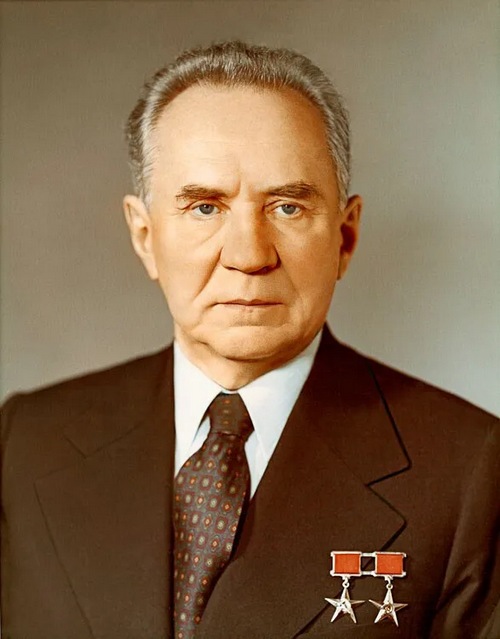
1965 — Alexei Kosygin. Historical Chronicles with Nikolai Svanidze
▪ ▪ ▪ ▪ ▪ ▪ ▪

1965 год — Алексей Косыгин. Исторические хроники с Николаем Сванидзе


 1965 — Alexeï Kossyguine. Chroniques historiques avec Nikolaï Svanidze

 1965 god — Aleksey Kosygin. Istoricheskiye khroniki s Nikolayem Svanidze

 
Directed by : Anatoli KRAPIVIN (Анатолий КРАПИВИН), Aleksey PODGORNY (Алексей ПОДГОРНЫЙ), Sergey_3 ZHUKOV (Сергей_3 ЖУКОВ)
Writing credits : Marina ZHUKOVA (Марина ЖУКОВА)
Cinematography : Viktor STUPIN (Виктор СТУПИН)
Produced by : Nikolay BILYK (Николай БИЛЫК)
Narrator : Nikolay SVANIDZE (Николай СВАНИДЗЕ)
Character(s) : Nikita KHRUSHCHEV (Никита ХРУЩЁВ), Iosif STALIN (Иосиф СТАЛИН)
Production : ООО "Наш Взгляд" ("Nash Vzglyad"), Телеканал "Россия " (TV channel "Rossiya")
 

Plot synopsis
The film traces the political, social, and economic evolution of the USSR from 1965 onward, a pivotal year marking the twentieth anniversary of victory over Nazi Germany. For the first time, May 9 becomes a public holiday, a military parade is held, and the true scale of human losses is officially acknowledged: about twenty million deaths. This belated commemoration reveals a society that is still relatively young, yet deeply scarred by the war and by Stalinist repression.

But 1965 also signals the start of a decline: a gradual drop in male life expectancy, social exhaustion, ideological disillusionment, and growing indifference to political slogans. The promises of prosperity and communism made under Khrushchev have proved illusory, while food shortages and rising prices trigger unrest, such as the 1962 Novocherkassk protests, which were brutally suppressed.

In this context, Alexei Kosygin becomes head of government and inherits an economy shaped by Stalinism: centralized, reliant on coercion, oriented toward heavy industry and the military-industrial complex, to the detriment of consumer goods and agriculture. Aware that this model is running out of steam, Kosygin launches a reform in 1965 aimed at introducing elements of profitability, greater enterprise autonomy, and material incentives.

Influenced by economists such as Evsei Liberman, the reform seeks to modernize the system without overthrowing it politically. It produces short-term positive effects, notably between 1966 and 1971, but soon runs into resistance from the bureaucracy, the Party’s control, and the fear of any challenge to the system.

The events in Prague in 1968 hasten the rollback of reforms: economic liberalization appears dangerously linked to political liberalization. The USSR then opts for authoritarian stability, made easier by rising oil and gas revenues, at the cost of any structural modernization. Kosygin—clear-eyed but trapped within the system he has served all his life—witnesses the failure of his project and the long-term freezing of the Soviet economy.


Selected in the following festivals or events :
- Historical Chronicles with Nikolay Svanidze, (kinoglaz.fr), 2026

Photos, videos, texts


Alekseï KOSSYGUINE (Алексей Николаевич КОСЫГИН) 1904-1980