


Russian and soviet cinema
The Unknown
▪ ▪ ▪ ▪ ▪ ▪ ▪
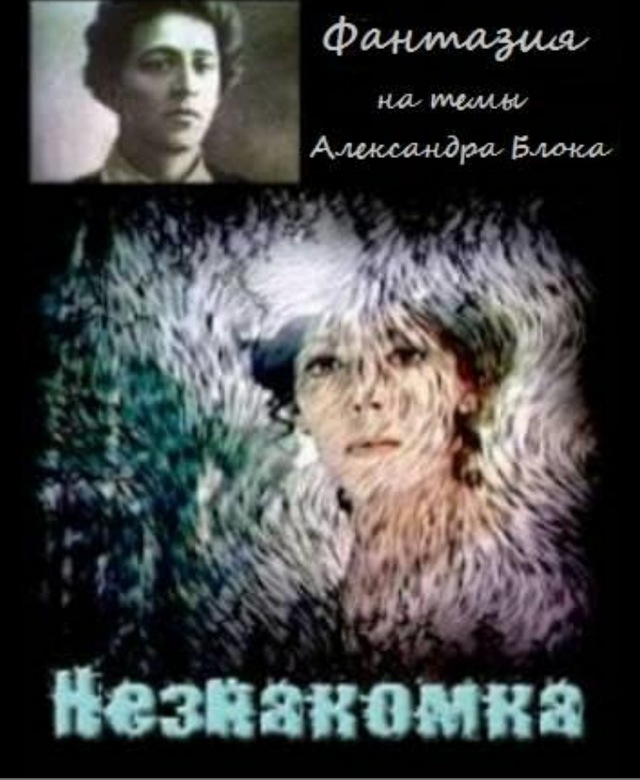
Незнакомка
L'Inconnue
Nezakomka

Directed by : Aleksandr BELINSKY (Александр БЕЛИНСКИЙ)
Writing credits : Alexander BLOK ( Александр БЛОК)
Cast
Galina MEZENTSEVA (Галина МЕЗЕНЦЕВА) ...Dream-Unknown
Character(s) : Alexander BLOK ( Александр БЛОК)
Site : ru-Wikipedia
Plot synopsis
The film's imagery is inspired by Alexander Blok's poems from the 1910s.
Amid the greenery of St. Petersburg parks, the white dress of a beautiful stranger flickers. Together with the film's hero, the poet's prototype, and other characters—diners at a restaurant—we wander through the city, visiting restaurants, the train station, and a reception at a rich and noble home. And everywhere we encounter the stranger. Not only the hero dreams of her, but also the young seminarian speaking of love, the elderly clerk selling a miniature in which the poet recognizes his stranger, and the old poet reading his poems, memories of youth and love... The poet stands by the Neva: an organ grinder passes by, and a shooting star streaks across the sky. A slender, almost transparent figure in black leans on the railing of the embankment not far from the poet. There she is, almost close enough to touch, but suddenly she is taken away by another. The poet thinks he has lost her. In his wandering search, he ends up at a wealthy house for a reception. Suddenly, a woman in black enters the room—she has almost materialized, his stranger. But looking out the window, he again sees the bright and mysterious image. Which of them is she, his dream? But a dream is like a cloud; it cannot be touched. The afterword to the film once again features Blok's poems dedicated to the creative artist. The artist's credo, as Blok proclaimed: "The world is beautiful." Just as beautiful is the city that gave birth to the poet and his poetry. Fantasy and illusion, the sublime and the base, are intertwined in the poem "The Stranger."
Songs performed by Oleg Anofriev are featured in the background.
Selected in the following festivals or events :
- Contemporary Russian Poets and Russian or Soviet Cinema, (kinoglaz.fr), 2026
Photos, videos, texts
**** Стихотворение -Poème - Poem ***
Незнакомка
Незнакомка
По вечерам над ресторанами
Горячий воздух дик и глух,
И правит окриками пьяными
Весенний и тлетворный дух.
Вдали над пылью переулочной,
Над скукой загородных дач,
Чуть золотится крендель булочной,
И раздается детский плач.
И каждый вечер, за шлагбаумами,
Заламывая котелки,
Среди канав гуляют с дамами
Испытанные остряки.
Над озером скрипят уключины
И раздается женский визг,
А в небе, ко всему приученный
Бессмысленно кривится диск.
И каждый вечер друг единственный
В моем стакане отражен
И влагой терпкой и таинственной,
Как я, смирен и оглушен.
А рядом у соседних столиков
Лакеи сонные торчат,
И пьяницы с глазами кроликов
«In vino veritas!»* кричат.
И каждый вечер, в час назначенный
(Иль это только снится мне?),
Девичий стан, шелками схваченный,
В туманном движется окне.
И медленно, пройдя меж пьяными,
Всегда без спутников, одна
Дыша духами и туманами,
Она садится у окна.
И веют древними поверьями
Ее упругие шелка,
И шляпа с траурными перьями,
И в кольцах узкая рука.
И странной близостью закованный,
Смотрю за темную вуаль,
И вижу берег очарованный
И очарованную даль.
Глухие тайны мне поручены,
Мне чье-то солнце вручено,
И все души моей излучины
Пронзило терпкое вино.
И перья страуса склоненные
В моем качаются мозгу,
И очи синие бездонные
Цветут на дальнем берегу.
В моей душе лежит сокровище,
И ключ поручен только мне!
Ты право, пьяное чудовище!
Я знаю: истина в вине.
Незнакомка
По вечерам над ресторанами
Горячий воздух дик и глух,
И правит окриками пьяными
Весенний и тлетворный дух.
Вдали над пылью переулочной,
Над скукой загородных дач,
Чуть золотится крендель булочной,
И раздается детский плач.
И каждый вечер, за шлагбаумами,
Заламывая котелки,
Среди канав гуляют с дамами
Испытанные остряки.
Над озером скрипят уключины
И раздается женский визг,
А в небе, ко всему приученный
Бессмысленно кривится диск.
И каждый вечер друг единственный
В моем стакане отражен
И влагой терпкой и таинственной,
Как я, смирен и оглушен.
А рядом у соседних столиков
Лакеи сонные торчат,
И пьяницы с глазами кроликов
«In vino veritas!»* кричат.
И каждый вечер, в час назначенный
(Иль это только снится мне?),
Девичий стан, шелками схваченный,
В туманном движется окне.
И медленно, пройдя меж пьяными,
Всегда без спутников, одна
Дыша духами и туманами,
Она садится у окна.
И веют древними поверьями
Ее упругие шелка,
И шляпа с траурными перьями,
И в кольцах узкая рука.
И странной близостью закованный,
Смотрю за темную вуаль,
И вижу берег очарованный
И очарованную даль.
Глухие тайны мне поручены,
Мне чье-то солнце вручено,
И все души моей излучины
Пронзило терпкое вино.
И перья страуса склоненные
В моем качаются мозгу,
И очи синие бездонные
Цветут на дальнем берегу.
В моей душе лежит сокровище,
И ключ поручен только мне!
Ты право, пьяное чудовище!
Я знаю: истина в вине.