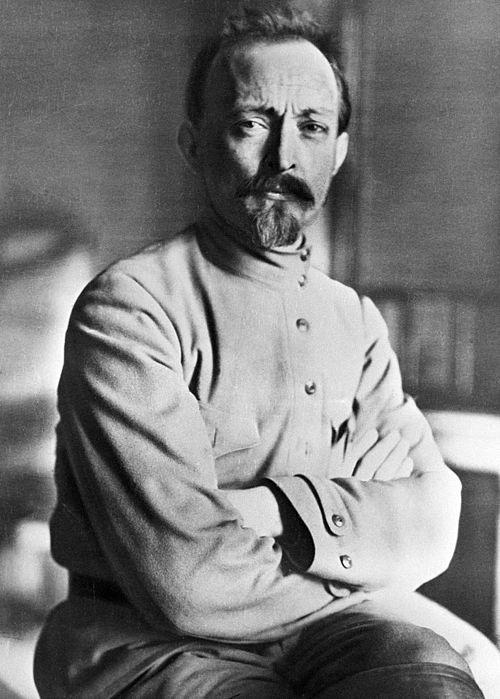
Felix Edmundovich Dzerzhinsky (September 30, 1877 – July 20, 1926) was a Russian revolutionary, statesman, and the founder of the Soviet security organs, known for his role in establishing and consolidating Soviet power in the early years after the October Revolution.
Early Life and Education
Felix Dzerzhinsky was born in Warsaw, into a family of Polish szlachta (nobility). His father, Edmund Dzerzhinsky, was a landowner, and his mother, Maria, came from a family of Polish intellectuals. Felix received his education at a gymnasium, where he showed an interest in literature and philosophy. In 1895, he entered the University of Warsaw, but was soon arrested for participating in revolutionary activities and spent several years in prison and exile.
Revolutionary Activity
After returning from exile, Dzerzhinsky took an active part in the revolutionary movement. He became a member of the Russian Social Democratic Labour Party (RSDLP) and supported the Bolsheviks. In 1917, he played an important role in preparing the October Revolution, organizing efforts to seize power in Petrograd.
Civil War and the Cheka
After the October Revolution, Dzerzhinsky was appointed chairman of the All-Russian Extraordinary Commission for Combating Counterrevolution and Sabotage (Cheka), created to fight internal enemies of the Soviet government. Under his leadership, the Cheka became an important instrument for suppressing opposition, combating crime, and ensuring the security of the new state. Dzerzhinsky actively employed methods of terror and repression, which made him one of the most controversial figures in Soviet history.
During the Civil War, Dzerzhinsky organized the struggle against White forces, foreign interventions, and internal uprisings. He also dealt with issues of food supply and ensured the security of transportation routes.
Economic Activity
In addition to his work with the Cheka, Dzerzhinsky dealt with economic affairs. In 1920, he was appointed People's Commissar of Railways, and later headed the People’s Commissariat of Heavy Industry. He actively contributed to the restoration of the economy after the Civil War, the introduction of new technologies, and the organization of industrial production.
Dzerzhinsky also paid close attention to issues of socialist development, supporting the ideas of a planned economy and centralized management.
Later Years and Health
In 1926, Dzerzhinsky’s health deteriorated sharply. He suffered from cardiovascular diseases and was forced to resign from his post as chairman of the Cheka. On July 20, 1926, Felix Dzerzhinsky died in Moscow. His death had a wide public resonance, and he was buried at the Krasnaya Presnya Cemetery in Moscow.
Legacy
Felix Dzerzhinsky remains a controversial figure in Russian history. On the one hand, he is considered one of the founders of Soviet state security and a defender of the revolution; on the other hand, his methods and repressions have drawn criticism and condemnation. Dzerzhinsky became a symbol of the Bolsheviks’ harsh policies and their struggle against opposition.
During the Soviet era, his name was commemorated in street names, monuments, and institutions, such as the Dzerzhinsky District in Moscow and the Dzerzhinsky Plant. However, after the collapse of the Soviet Union, his figure became the subject of debate and reevaluation. In 1991, his monument was dismantled, and in 2006, his name was removed from several street names.
Dzerzhinsky remains an important figure for studying the history of the Soviet state, its methods and ideology, and for understanding the complex processes taking place in Russia in the early 20th century.