


Russian and soviet cinema
Compositor,
Song Music
Born 1903, Georgia
Died 1978
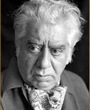
Aram KHACHATURIAN
▪ ▪ ▪ ▪ ▪ ▪ ▪
Арам Ильич ХАЧАТУРЯН
Aram KHATCHATOURIAN
Filmography (extracts)
Compositor
2014 - Masquerade (Маскарад) from Rimas TUMINAS [film-spectacle]
1977 - Spartacus (Спартак) from Vadim DERBENYOV , Yuri GRIGOROVICH [fiction, 94 mn]
1972 - One Day, the Nile (Люди на Ниле) from Youssef CHAKHINE [fiction, 105 mn]
1955 - Othello (Отелло) from Sergey YUTKEVICH [fiction, 109 mn]
1953 - Admiral Ushakov (Адмирал Ушаков) from Mikhail ROMM [fiction, 107 mn]
1953 - The Men-of-War Storm Bastions (Корабли штурмуют бастионы) from Mikhail ROMM [fiction, 94 mn]
1953 - Velikoe proshchanie (Великое прощание) from Grigori ALEXANDROV , Mikhail CHIAURELI , Sergey GERASIMOV , Ilya KOPALIN , Yelizaveta SVILOVA [documentary, 65 mn]
1949 - The Stalingrad Battle (Сталинградская битва) from Vladimir PETROV [fiction, 192 mn]
1947 - Light Over Russia (Свет над Россией) from Sergey YUTKEVICH [fiction, 69 mn]
1944 - No. 217 (Человек 217) from Mikhail ROMM [fiction, 101 mn]
1940 - Salawat Yulaev (Салават Юлаев) from Yakov PROTAZANOV [fiction, 72 mn]
1935 - Pepo (Пэпо) from Amo BEK-NAZAROV , Armen GULAKYAN [fiction, 88 mn]
Song Music
1955 - Othello (Отелло) from Sergey YUTKEVICH [fiction, 109 mn]
1953 - The Men-of-War Storm Bastions (Корабли штурмуют бастионы) from Mikhail ROMM [fiction, 94 mn]
1935 - Pepo (Пэпо) from Amo BEK-NAZAROV , Armen GULAKYAN [fiction, 88 mn]
Sites : Kino-teatr, IMDb, Chapaev.media, ru-Wikipedia, Virtual Museum of A. Khachaturian
Biography
Aram KHACHATURIAN (Арам ХАЧАТУРЯН, 1903–1978)
A Soviet composer, conductor and teacher of Armenian origin, Aram Khachaturian was born on 6 June 1903 in Tiflis (now Tbilisi, Georgia), into an Armenian family.
He grew up in an environment shaped by the musical traditions of the Caucasus, which would have a profound influence on his work.
He moved to Moscow in 1921 and began studying music relatively late, first at the Gnessin Institute and then at the Moscow Conservatory, where he studied composition under Nikolai Myaskovsky, among others.
During the 1930s, he established himself as one of the most original composers in the Soviet Union, combining Armenian musical traditions with particularly brilliant and expressive orchestral writing.
His most famous works include the Piano Concerto (1936), the Violin Concerto (1940), the ballets Gayane (1942), featuring the celebrated Sabre Dance, and Spartacus (1956), as well as the incidental music for Masquerade (1941).
Khachaturian also maintained close ties with Soviet cinema. As early as 1935, he composed the music for Pepo, directed by Amo Bek-Nazarov, the first Armenian feature-length sound film.
He subsequently worked for several Soviet film studios and collaborated with directors including Yakov Protazanov, Vladimir Petrov, Sergei Yutkevich and, on several occasions, Mikhail Romm.
For Romm, he composed the scores for The Man No. 217 (1945), The Russian Question (1948), Admiral Ushakov (1953) and The Men-of-War Storm Bastions (1953).
His film compositions, combining large-scale symphonic passages with melodies inspired by folk traditions, also include songs and choral works, such as Song of the Russian Sailors, with lyrics by Aleksei Surkov.
He also composed the music for Othello (1956), directed by Sergei Yutkevich.
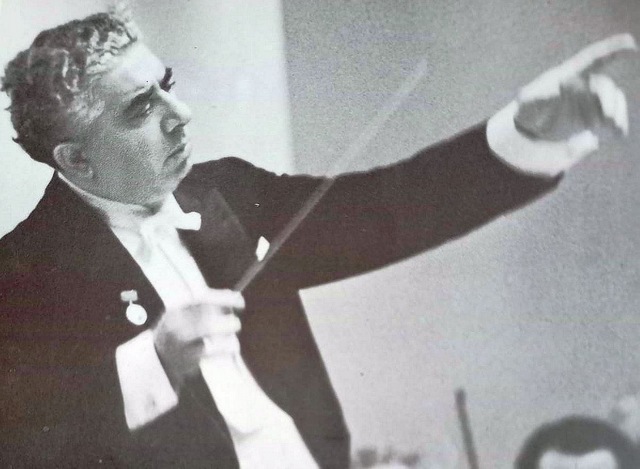
Alongside his work as a composer, he taught in Moscow and conducted performances of his works in many countries.
Aram Khachaturian died in Moscow on 1 May 1978. He remains one of the major figures of twentieth-century Soviet music, whose work also holds an important place in the history of Soviet cinema.
Commentaries
- Музыка Арама Хачатуряна и кино [Musique de Aral Khatchatourian et le cinéma]
2023, Армянский музей - В бушующем звуковом потоке [A propos de Aram Khatchatourian]
Георгий ТИГРАНОВ, 1987, Chapaev.media / Москва «Музыка» - Художник-интернационалист [A propos de Aram Khatchatourian]
Георгий ТИГРАНОВ, 1987, Chapaev.media / Москва «Музыка»
Photos, videos, texts
- Художник-интернационалист [A propos de Aram Khatchatourian]
Георгий ТИГРАНОВ, 1987, Chapaev.media / Москва «Музыка»
Photos, videos, texts