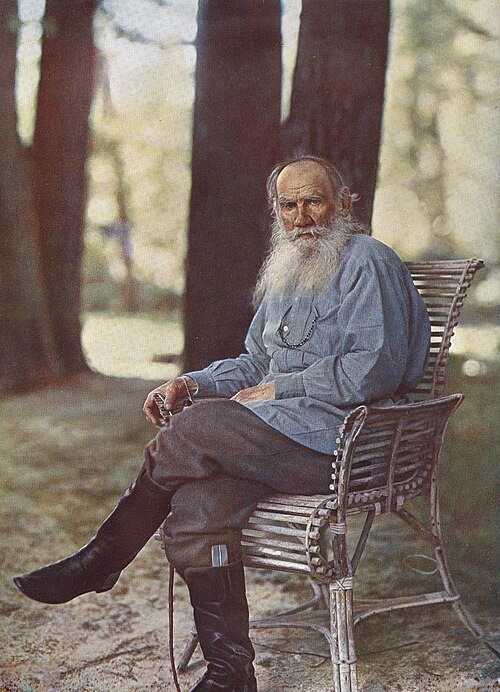
Leo (Lev) Nikolaevich Tolstoy (1828–1910) stands among the towering figures of world literature — a Russian novelist, philosopher, and moral thinker whose works reshaped the art of fiction and challenged the conscience of society. His writings span the deepest questions of morality, religion, social justice, and the nature of the human soul.
Early Life
Born on September 9, 1828, into an aristocratic family on the estate of Yasnaya Polyana in Tula Province, Tolstoy lost his parents at an early age and was raised by relatives. In 1844, he entered Kazan University, first studying Oriental languages and then law, but soon abandoned his studies, restless in spirit and yearning for a life of meaning. In 1851, seeking both adventure and purpose, he traveled to the Caucasus and joined the Russian army. The harsh beauty of the mountains, the discipline of military life, and the reality of war left an indelible mark on his worldview and artistic vision.
The Rise of a Literary Master
Tolstoy began publishing in the early 1850s, quickly earning attention with his autobiographical trilogy — Childhood (1852), Boyhood (1854), and Youth (1857). Yet it was with his monumental epics War and Peace (1869) and Anna Karenina (1877) that he secured his place in literary immortality. These masterpieces weave together the intimate and the historical, portraying human passions, moral dilemmas, and the great social transformations of 19th-century Russia with unmatched depth and realism.
A Spiritual Awakening
In the late 1870s, Tolstoy underwent a profound spiritual crisis. Dissatisfied with the privileges of his class and the doctrines of the Orthodox Church, he sought a faith grounded in compassion, simplicity, and moral responsibility. Rejecting institutional religion, he embraced a philosophy of nonviolence, humility, and love of all beings. Works such as A Confession (1882) and The Kingdom of God Is Within You (1894) expressed these convictions, inspiring figures from Mahatma Gandhi to Martin Luther King Jr.
Public Voice and Moral Conscience
Tolstoy’s moral authority extended far beyond literature. He spoke tirelessly against war, capital punishment, social inequality, and the exploitation of peasants. His advocacy of simple living and renunciation of material wealth became as central to his legacy as his novels. In 1901, the Russian Orthodox Church excommunicated him, yet his influence only grew.
Final Years and Enduring Legacy
Even in his later years, Tolstoy’s creative energy did not wane. Resurrection (1899) offered a searing critique of injustice, and his essays continued to challenge political and moral complacency. In 1910, amid personal and spiritual turmoil, Tolstoy left his estate in search of solitude. He fell ill and died on November 20 at the remote railway station of Astapovo.
Tolstoy’s legacy transcends national borders and literary genres. As one of the founders of modern realism, his works remain a touchstone for writers and thinkers worldwide, not only for their artistic genius but for their unflinching search for truth.