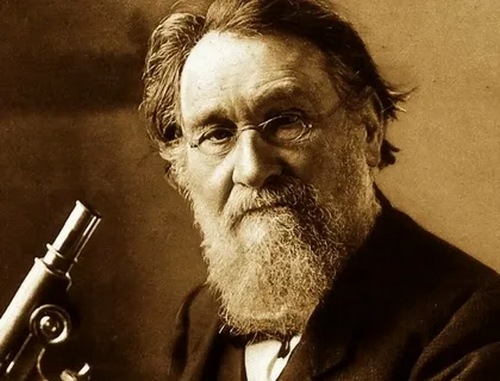
Ilya Ilyich Mechnikov (1845–1916) was a pioneering biologist, immunologist, and thinker whose work transformed our understanding of how the body defends itself against disease. Celebrated as one of the founders of modern immunology, he combined a brilliant scientific mind with an enduring curiosity about life, health, and human longevity.
Early Life and Education
Born on May 15, 1845, in the village of Ivanovka in the Vinnitsa Governorate of the Russian Empire (today part of Ukraine), Mechnikov was the second of three children in the family of a landowner and his cultured wife. From an early age, he displayed a passion for the natural sciences, particularly biology and zoology.
In 1864, he entered Odessa University to study natural sciences. There, he encountered the works of Charles Darwin and other great minds of the age, ideas that would profoundly influence his scientific vision. Graduating in 1867, he embarked on an academic career that would take him far beyond the borders of his homeland.
Scientific Breakthroughs
In the 1870s, while teaching and conducting research at Odessa University, Mechnikov began investigating the process he would later call phagocytosis — the ability of certain cells to engulf and destroy harmful microorganisms. This insight became the cornerstone of his cellular theory of immunity, revolutionizing the way scientists understood the body’s defenses.
His growing reputation led him abroad. In 1882, he worked in Germany in the laboratory of Emil von Behring, and in 1888, he accepted an invitation to join the Pasteur Institute in Paris as a professor. There, in one of Europe’s leading research centers, he deepened his studies of microbes, exploring not only their role in disease but also their potential to promote health.
Beyond Immunity
Mechnikov’s curiosity extended well beyond the immediate battle against infection. He was among the first to propose that certain microorganisms could be beneficial to human health — a vision that would later inspire the science of probiotics and the study of the microbiome. He also became fascinated by the biology of aging, hypothesizing that healthy living and proper diet could extend human life.
Recognition and the Nobel Prize
In 1908, Mechnikov’s contributions were honored with the Nobel Prize in Physiology or Medicine, awarded jointly with Paul Ehrlich for their groundbreaking work on immunity. The award acknowledged not just a single discovery, but a lifetime of transformative insight into the body’s defense mechanisms.
A Life of Inquiry
In his later years, Mechnikov remained a tireless advocate for scientific progress, publishing prolifically and lecturing widely. His warm manner and gift for communication made him a beloved figure among colleagues and students alike. Beyond science, he nurtured a love for philosophy and literature, often weaving broader reflections on human nature into his scholarly work.
Final Years and Legacy
Ilya Mechnikov died in Paris on July 15, 1916. His ideas reshaped the study of immunity, influenced generations of scientists, and remain deeply relevant today. The legacy of his research — from the defense against infectious disease to the beneficial role of microbes — continues to guide modern medicine and public health.
Mechnikov left behind a wealth of writings that still inform and inspire. His life was a testament to the belief that science, at its best, is not merely a profession but a quest for the well-being and dignity of all humanity.