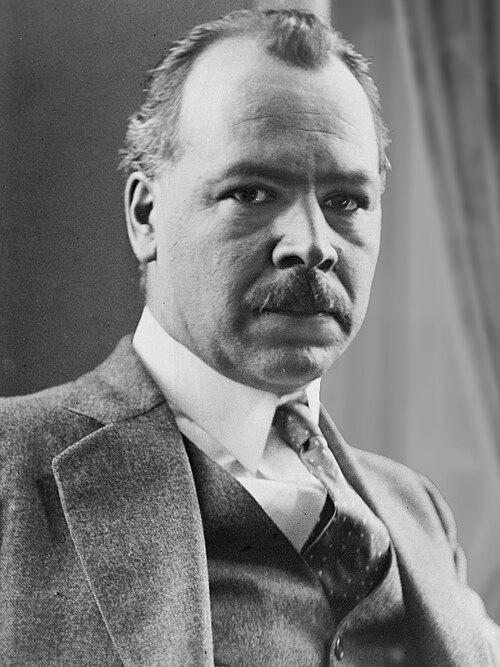
Nikolai Ivanovich Vavilov (1887–1943) was an outstanding Soviet geneticist and plant breeder, an academician of the USSR Academy of Sciences, and the founder of the Soviet school of plant genetics and breeding. His work had a profound impact on the development of agriculture and genetics worldwide.
Early Life and Education
Nikolai Vavilov was born on November 25 (November 13, Old Style), 1887, in Moscow into the family of a railway engineer. In 1906, he entered the natural sciences division of the Faculty of Physics and Mathematics at Moscow University, where he studied botany and zoology.
In 1911, he graduated with highest honors and remained at the Department of Botany to prepare for a professorship.
Scientific Career
In 1913, Vavilov began working at Petrograd University, where he studied genetics and plant breeding. In 1917, he became a professor and head of the Department of Genetics and Plant Breeding.
In 1920, Vavilov founded the Institute of Applied Botany and New Crops, which was later renamed the All-Union Institute of Plant Industry (VIR).
Expeditions and Research
Vavilov conducted numerous scientific expeditions around the world, collecting seeds and studying plant genetic resources. He visited more than 60 countries, including China, Japan, India, Persia, Afghanistan, Turkey, Greece, Italy, Spain, Portugal, Morocco, the United States, Canada, Mexico, Brazil, Argentina, Chile, and many others.
These expeditions resulted in the creation of one of the world’s largest seed collections, which became the foundation for plant breeding work in the USSR.
Scientific Achievements
Vavilov made major contributions to the development of genetics and plant breeding. He formulated the law of homologous series in hereditary variation, which became fundamental to the study of plant genetic resources.
He also developed breeding methods that made it possible to create new varieties of grain, vegetable, and industrial crops that were resistant to diseases and adverse environmental conditions.
Teaching Activity
Vavilov was a talented educator who trained many students who continued his work. He lectured at various universities and institutes and wrote scientific articles and books that became classics in the fields of genetics and plant breeding.
Arrest and Death
In 1940, Vavilov was arrested on charges of espionage and anti-Soviet activity. He was sentenced to 20 years in prison and sent to a facility in Saratov.
In 1943, under harsh prison conditions, Vavilov died from exhaustion and illness.
Legacy
After his death, Vavilov was rehabilitated and recognized as one of the greatest scientists of the 20th century. Streets, schools, institutes, and scientific prizes have been named in his honor.
In 1967, the N.I. Vavilov Memorial Museum-Archive was opened in Leningrad (now Saint Petersburg).
Nikolai Ivanovich Vavilov left an indelible mark on the history of science and agriculture, and his work continues to inspire scientists and plant breeders around the world.